


Red Ribbon Week: What Actually Works With Teens

Red Ribbon Week runs October 23 through 31, and schools across Texas will soon be handing out ribbons, pledge cards, and themed spirit days. Those traditions have value. The research on teen drug prevention, though, points somewhere less visible: the ongoing, ordinary conversations a teenager has with the adults at home. With fentanyl showing up in counterfeit pills, those conversations matter more now than they did a generation ago. This guide covers where Red Ribbon Week came from, which approaches tend to backfire, and how parents can talk with teens in a way that actually lands.
Where Red Ribbon Week Came From
Red Ribbon Week began with a loss. On February 7, 1985, DEA Special Agent Enrique "Kiki" Camarena was kidnapped by drug traffickers in Guadalajara, Mexico, and later killed. According to the DEA Museum, students at his former high school in Calexico, California, started a "Camarena Club" that spring, and people in his hometown began wearing red ribbons in his memory. By 1988, the National Family Partnership had organized the first national Red Ribbon Week.
Nearly four decades later, the DEA describes it as the oldest and largest drug prevention campaign in the country. The ribbons are the easy part. What happens at the dinner table afterward is up to families.
Why Scare Tactics Rarely Work With Teens
Many adults grew up with prevention programs built on fear: graphic slideshows, frying eggs, and warnings that any drug use led straight to ruin. Evaluations of those programs have been disappointing, a history we explored in DARE to Challenge: Why Drug Education Programs Fail.
Teenagers are skilled at spotting exaggeration. If a teen hears that one puff of marijuana will ruin their life, and then watches a classmate try it with no visible consequences, the adult who said it loses credibility on everything else. That includes the warnings that are completely accurate, like the ones about counterfeit pills. Accuracy is a prevention strategy in its own right.

What Teen Drug Prevention Looks Like at Home
The federal Substance Abuse and Mental Health Services Administration runs a parent campaign called Talk. They Hear You., built on research showing that a strong, open relationship with a parent is one of the most important factors in healthy child development. SAMHSA encourages parents to start the conversation before kids are exposed to alcohol and drugs, and to keep it going. Its guidance centers on five goals:
Make it clear that you disapprove of underage drinking and drug use.
Show that you care about your child's health, happiness, and success.
Become a source of honest information they can come back to.
Let them know you are paying attention and will step in when you see risky behavior.
Help them build practical skills for turning down alcohol and drugs.
Notice that the list is mostly about relationship. One big talk during Red Ribbon Week is a start. A dozen short ones in the car, while the radio is on and nobody has to make eye contact, will probably do more.
Practical Ways to Start the Conversation
Ask what they learned at school this week, and listen before you correct anything.
Use a news story or a TV plot as a lower-pressure way in.
Give them an exit plan, such as a code word they can text you to get picked up, no questions asked that night.
Be honest about your own experiences if they ask, without turning it into a lecture.
How to Talk to Teens About Fentanyl and Counterfeit Pills
This is the part of the conversation that has changed the most. A CDC analysis of overdose deaths among people ages 10 to 19 found that median monthly deaths rose 109 percent between late 2019 and late 2021. In that study, published in the CDC's Morbidity and Mortality Weekly Report, about 84 percent of those deaths involved illicitly manufactured fentanyl, and roughly one in four showed evidence of counterfeit pills.
Two other findings stand out for parents. About two-thirds of those deaths happened with a potential bystander nearby, and about 41 percent of the young people who died had a history of mental health conditions or treatment.
Those numbers translate into a few clear messages for teens:
A pill that did not come from a pharmacy cannot be trusted, no matter how real it looks or who is offering it.
Counterfeit pills are often made to look like Xanax, Percocet, or Adderall, and some are sold through social media apps.
If a friend is unresponsive or struggling to breathe, call 911 right away. Waiting to see if they sleep it off can cost a life.
Anxiety, depression, and stress are real, and there are safer ways to get help than self-medicating.
Texas schools now cover some of this material. Under Tucker's Law, Texas public schools must provide annual instruction on fentanyl abuse prevention and drug poisoning awareness to students in grades 6 through 12. Ask your teen what they heard in class. Their answer will tell you what stuck and what still needs filling in. For more background, read Understanding Fentanyl: Why It's So Dangerous and How to Stay Safe.
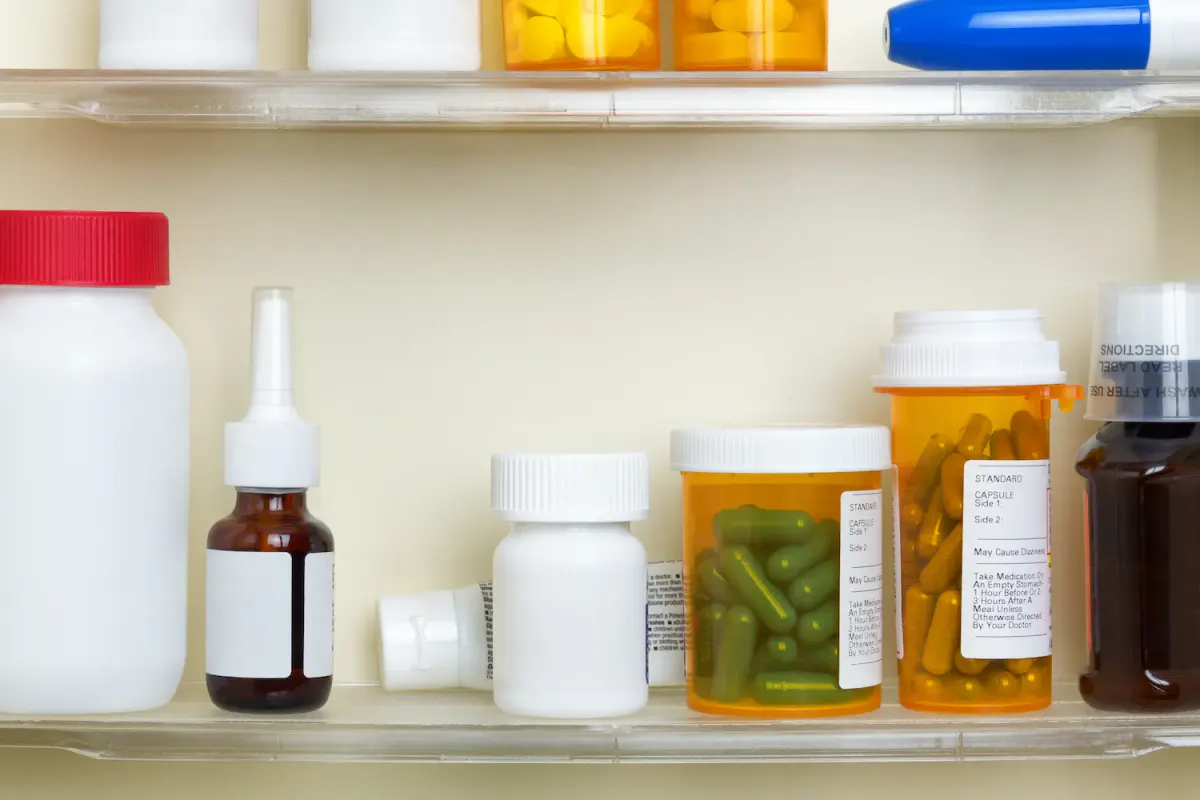
Use Take Back Day to Clear Out the Medicine Cabinet
The same week offers a practical step for the whole household. National Prescription Drug Take Back Day falls on Saturday, October 24, 2026, when collection sites across Texas accept unused or expired medications with no questions asked. During the April 2026 event, the DEA collected more than 642,000 pounds of medication nationwide.
Leftover opioids after a wisdom tooth extraction, an old ADHD prescription, or a forgotten bottle of anxiety medication can all end up in the wrong hands. Cleaning out the cabinet together is also an easy, low-key way to bring up the topic of prescription misuse.
When a Teen Needs More Than a Conversation
Sometimes the conversation reveals that use has already started. Warning signs can include sudden changes in friends, sliding grades, shifts in sleep or appetite, secrecy around a phone, missing money, or missing medication. None of these proves drug use on its own, but a cluster of them is worth taking seriously.
If you are worried, start with your teen's pediatrician or a licensed counselor who works with adolescents. Stay calm, keep the relationship intact, and focus on safety first.
These conversations sometimes raise questions for parents, too. If talking to your teen about drinking or drug use makes you look harder at your own, that deserves attention. Adults in Texas looking for addiction treatment can find support that fits around family life, and seeking help models exactly the kind of honesty you hope your kids will practice.
Frequently Asked Questions
When is Red Ribbon Week 2026?
Red Ribbon Week 2026 runs October 23 through 31. The DEA describes it as the oldest and largest drug prevention campaign in the United States, and many Texas schools hold themed activities throughout the week.
What age should I start talking to my kids about drugs?
SAMHSA recommends starting before your child is likely to be exposed to alcohol or drugs, which for many families means elementary school. Early conversations can be simple and age appropriate, then grow more detailed as your child gets older.
How do I talk to my teenager about fentanyl?
Stay calm and factual. Explain that pills not from a pharmacy can contain fentanyl even when they look real, that fake pills are often sold through social media, and that they should call 911 right away if a friend becomes unresponsive.
Where can I dispose of old prescription medications in Texas?
National Prescription Drug Take Back Day is Saturday, October 24, 2026, with collection sites across Texas. Many pharmacies and police departments also offer year-round drop boxes for unused medications.
Prevention Starts With Being Someone They Can Talk To
Red Ribbon Week gives families a reason to start the conversation, but the real work happens in the weeks and years after the ribbons come down. Honest information, steady attention, and a relationship your teen trusts give them the best footing when someone offers them a pill at a party. If you or someone you love is struggling with addiction, More Than Rehab is here to help. Reach out today for a confidential conversation.
Related Posts
Addiction Treatment Texas: Breaking the Stigma
September 29, 2026
Recovery Month: How Families Can Help
September 24, 2026
Sending Your Child to College: First-Semester Risks
August 31, 2026
Stimulant Misuse and Heat Risk in Texas Two-A-Days
August 26, 2026

How Gratitude Can Strengthen Your Addiction Recovery Journey
September 24, 2025