
Kratom in Texas: What You May Not Know You're Taking

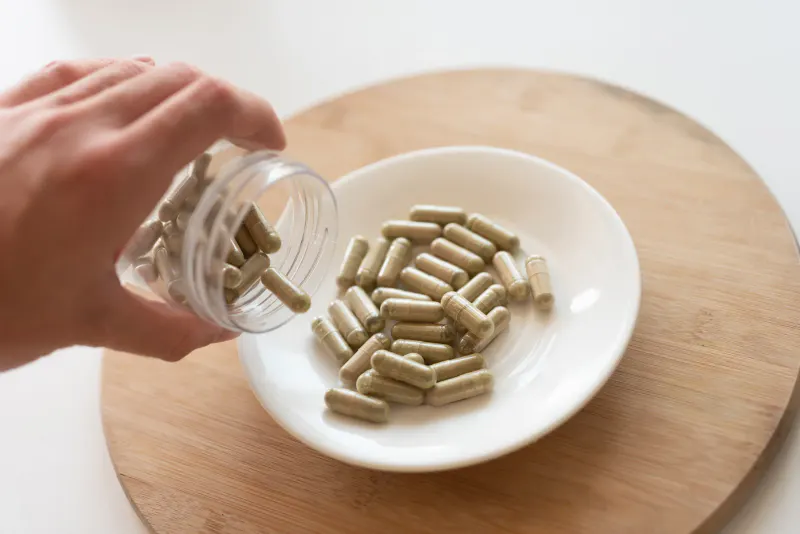
Kratom is easy to find in Texas. It sits behind the counter at smoke shops and convenience stores in capsules, powders, gummies, shots, and drinks, often with labels that say "botanical" or "all natural." That easy access makes it look harmless. The reality is more complicated, because two products sold under the same name can contain very different things, and the person buying them usually has no way to tell. This guide explains what kratom is, what Texas and federal rules say right now, and the questions worth asking before you take anything sold as kratom in Texas.
What Kratom Is and How It Affects the Body
Kratom comes from the leaves of Mitragyna speciosa, a tree native to Southeast Asia. According to the National Institute on Drug Abuse, kratom can produce both stimulant-like and opioid-like effects. Many people report feeling more alert at smaller doses and more sedated at larger ones, although researchers have not confirmed that the effects reliably depend on dose.
The two best-studied compounds in the plant are mitragynine and 7-hydroxymitragynine, usually shortened to 7-OH. Both act partly on the same brain receptors that opioids do. In the natural leaf, 7-OH makes up only a small share of the plant's alkaloids. Some products on shelves today concentrate it far beyond that, which we covered in detail in our earlier post on the 7-OH surge in Texas.
NIDA also notes that people may have mild to moderate withdrawal symptoms when they stop regular kratom use. There are no uses for kratom approved by the U.S. Food and Drug Administration.

Why a Kratom Label May Not Tell the Whole Story
Most people assume that two bottles labeled "kratom" hold roughly the same thing. In practice, the word covers everything from dried leaf powder to lab-made compounds with much stronger opioid effects.
Here are a few reasons the package in your hand may not match what you expect:
Some products are semi-synthetic. Manufacturers convert compounds from the plant into concentrated 7-OH or related substances and sell them in the same aisle as leaf powder.
Kratom products are not regulated as medicines, so there is no standard dose. One capsule from one brand may be much stronger than a full serving from another.
NIDA reports that kratom products may contain contaminants, including heavy metals and harmful bacteria.
Kratom increasingly shows up mixed into other products. A 2026 CDC report found that kratom had become a common co-exposure in poison center cases involving kava, the relaxation drink sold in bars and wellness shops.
When announcing federal action on several kratom-related compounds in August, the Justice Department said these products are often sold under labels that obscure their true risks. If you cannot say with confidence what is in a product, you cannot know how your body will react to it.
The Risks Grow When Kratom Is Mixed With Other Substances
The clearest warning in the research has to do with combinations. A March 2026 CDC report on kratom-related calls to poison centers found that reports rose from 258 in 2015 to 3,434 in 2025, an increase of about 1,200 percent. The authors linked the sharp jump in 2025 to the arrival of high-potency, semi-synthetic products.
Across those ten years, poison centers recorded 233 deaths associated with kratom. Nearly four in five involved other substances, most often opioids, followed by benzodiazepines, stimulants, and alcohol. Reports involving more than one substance led to hospitalization roughly half the time.
NIDA describes kratom-linked deaths as rare and says nearly all involved other drugs or contaminants. Both findings point in the same direction. Kratom taken alongside alcohol, prescription painkillers, anti-anxiety medication, or other drugs carries far more risk than many people realize, and some of those combinations happen by accident when a product contains something unexpected.
The CDC data also challenge a common assumption about who is affected. Most poison center reports involved adults ages 20 to 39, and reports among adults 40 to 59 rose faster than any other group. Kratom concerns are not limited to teenagers and college students.

What Texas and Federal Law Say About Kratom Right Now
Kratom is legal in Texas for adults, with limits. Under Senate Bill 497, which took effect in 2023, the Texas Department of State Health Services says kratom products:
Cannot be sold to anyone under 18
Cannot contain more than 2 percent 7-OH in their alkaloid makeup
Cannot contain synthetic alkaloids, including synthetic 7-OH
Must carry labeling with directions for use and a recommended serving size
Federal rules are changing quickly this fall. In July, the Drug Enforcement Administration announced plans to temporarily schedule 7-OH and three related compounds. In late August, the Justice Department announced emergency Schedule I placement for those three related compounds. On October 14, the DEA published an updated notice of its intent to place 7-OH above a set concentration in Schedule I, with that temporary order expected on or after November 13. Federal officials have said these actions target concentrated and synthetic products, not traditional leaf kratom. Even so, the DEA continues to list kratom as a drug of concern.
Legal status and safety are separate questions. A product can be legal to sell and still carry real risks for the person taking it.
Questions to Ask Before Taking Any Kratom Product
Kratom is a personal decision for adults, and this article is not a lecture. If you are considering it, or already use it, these questions can help you think it through more clearly:
Do I know whether this product is leaf powder, an extract, or a concentrated 7-OH product?
Am I taking it with alcohol, prescription medication, or any other substance?
Have I talked with a doctor or pharmacist about how it could interact with my medications?
Am I using more than I used to, or taking it earlier in the day than before?
Do I feel sick, anxious, or restless when I skip it?
If you find yourself answering yes to the last two, pay attention. Needing more to feel the same effect and feeling unwell without it are early signs of dependence. Many people start taking kratom to manage pain, low energy, anxiety, or opioid withdrawal on their own. Those underlying problems deserve real care from someone who can treat them directly.
If someone becomes extremely drowsy, confused, or has trouble breathing after taking kratom, especially with other substances, call 911 right away.
Finding Help: Drug Rehab in Texas for Kratom Use
Because kratom acts on opioid receptors, stopping regular use can bring withdrawal symptoms, especially after heavy or long-term use. A medically supervised plan can make that process safer and more manageable.
At More Than Rehab, we treat kratom and 7-OH dependence with the same care we bring to our opioid rehab program in Texas. Our social model of recovery means you work through change with peers who understand it, supported by clinical care that also addresses the anxiety, pain, or depression that may have led to kratom use in the first place. More Than Rehab is LegitScript certified, so you can trust that our programs and claims have been independently reviewed.
Frequently Asked Questions
Is kratom legal in Texas?
Yes, for adults. Texas law allows kratom products to be sold to people 18 and older, as long as they contain no more than 2 percent 7-OH in their alkaloid makeup and no synthetic alkaloids. Federal rules targeting concentrated 7-OH and related compounds are being updated this fall.
Is kratom an opioid?
Kratom is not classified as an opioid, but its main compounds, mitragynine and 7-OH, partly activate the same brain receptors that opioids act on. At higher doses, kratom can produce opioid-like effects, and regular use can lead to withdrawal symptoms when someone stops.
Is it dangerous to mix kratom with alcohol or other drugs?
Yes. A 2026 CDC report found that most kratom-associated deaths reported to poison centers involved other substances, most often opioids, benzodiazepines, stimulants, or alcohol. Talk with a doctor or pharmacist before combining kratom with any medication.
How do I know if I am dependent on kratom?
Common signs include needing more kratom to get the same effect, feeling sick, anxious, or restless when you skip a dose, and finding it hard to cut back. A treatment provider can help you assess your use and plan a safe way to stop.
Knowing What You Take Is the First Step
Kratom in Texas is legal, widely sold, and far less predictable than its packaging suggests. Understanding what a product may contain, avoiding risky combinations, and noticing early signs of dependence can help you make safer choices. If you or someone you love is struggling with addiction, More Than Rehab is here to help. Reach out today for a confidential conversation.
Related Posts

Addiction Treatment Texas: Breaking the Stigma
September 29, 2026
Substance Use and Suicide Risk in Texas 2026
September 21, 2026

Stimulant Misuse and Heat Risk in Texas Two-A-Days
August 26, 2026

When Grief Leads to Addiction in Texas
July 8, 2026
What Is Medication-Assisted Treatment (MAT)?
May 29, 2026