June is PTSD Awareness Month ... You're not alone... We're here to help...


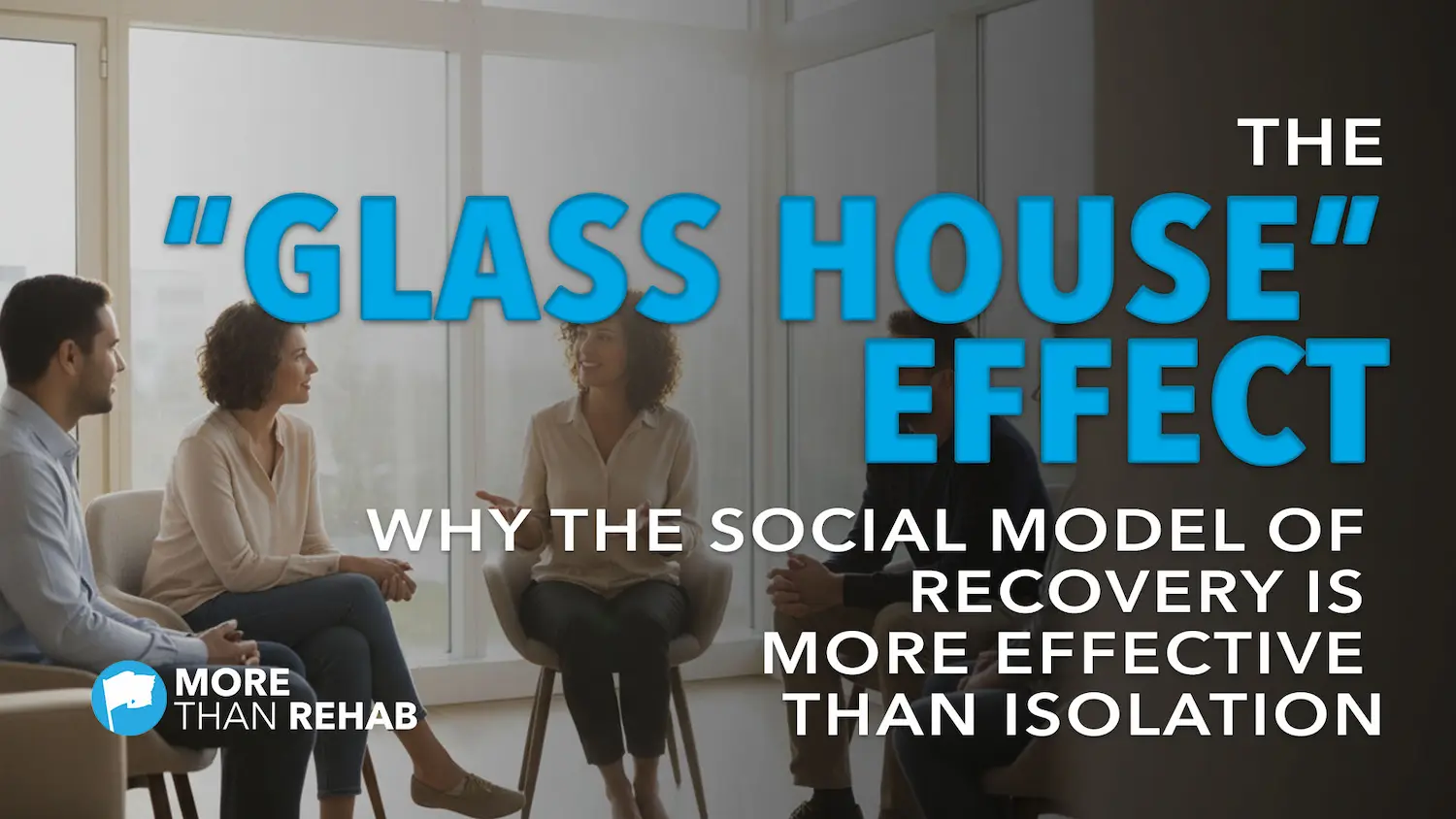
For decades, the image of addiction recovery was one of profound isolation: a person locked away in a sterile clinical room, white-knuckling their way through intense cravings, alone with their thoughts and their shame. We have since learned that this "lone wolf" approach is not just difficult, it is often counterproductive. At More Than Rehab, we believe in a different path. We utilize a social model of recovery because we know that connection is the literal "anti-drug."
Isolation is the breeding ground for relapse. When someone is cut off from a supportive community, they are left to face the "vicious cycle" of addiction and mental health issues without a safety net. This is why our philosophy centers on community integration and peer support. We don't just want you to get sober; we want you to belong.
The "Glass House" effect describes the fragility of a recovery built in isolation. It may look clear and structured from the outside, but without the support of others, one single "stone" like a stressful day, a negative emotion, or a sudden trigger, can cause the whole structure to shatter.
In contrast, a collaborative recovery model builds a foundation of reinforced support. Instead of a fragile glass house, you are part of a community. If you stumble, there are others there to catch you. If you have a bad day, there is a peer who has been exactly where you are and can guide you back to center.
Isolation feeds the "whack-a-mole" effect of co-occurring disorders. When a person struggles with both addiction and a mental health condition like depression or PTSD, treating one in isolation often causes the other to flare up. Untreated anxiety or loneliness intensifies substance use, creating a cycle that is nearly impossible to break alone.
A core component of our approach is peer support for addiction. There is a unique power in hearing, "I've been there, and I made it through," from someone who isn't wearing a lab coat. Peer groups, such as those found in AA, NA, or SMART Recovery, provide a lasting role in maintaining gains made during initial treatment.
While social support is vital, it must be paired with expert care. Community-based treatment at More Than Rehab means we treat the whole person in a setting that mirrors real-world social dynamics.
A dangerous myth in the industry is that someone must “get sober first” before addressing any mental health issues. In reality, experts warn this approach often fails. Simply staying clean doesn't automatically resolve underlying psychiatric issues like major depression, bipolar disorder, or PTSD. Without integrated care, the untreated disorder usually resurfaces and drives a relapse.
Our Texas rehab centers use integrated care to address addiction and mental health simultaneously. Studies find that clients who address mental health and addiction together use fewer substances over time and have fewer hospitalizations than those who treat only one disorder. This is especially true for those dealing with "Super Meth" or fentanyl, where the brain's reward system has been rewired and requires a comprehensive "whole-person" approach.
Long-term sobriety isn't a destination; it's a practice. A major part of the social model involves creating a personalized relapse-prevention plan that leans heavily on community resources.
1. What is the difference between a medical model and a social model of recovery?
The medical model often treats addiction as a clinical biological issue to be "fixed" through traditional medicine and isolation. The social model of recovery views the environment and social connections as primary drivers of healing, emphasizing peer support and community integration alongside clinical care.
2. Can I still get clinical help in a social model program?
Absolutely. At More Than Rehab, we combine the best of both worlds. We offer inpatient treatment with 24/7 medical monitoring and detox while maintaining a community-focused atmosphere where you attend support groups and group therapy.
3. Is the social model effective for "Super Meth" or fentanyl addiction?
Yes. Because these substances hit the brain's reward system so hard and cause such intense cravings, a strong social support network is essential to help a person stay grounded through the difficult early stages of recovery.
4. How does a community help with dual diagnosis?
In integrated dual diagnosis care, group therapy allows individuals to see that they are not alone in their mental health struggles. Sharing coping strategies for anxiety or PTSD helps normalize the experience and reduces the shame that often drives substance use.
Recovery is not meant to be a solo journey. If you are tired of living in the "Glass House" of isolation and are ready to join a community that will stand by you, we are here. Our Texas-based programs offer a warm, personalized approach that treats both your addiction and your mental health together.
Don't face the cycle of addiction alone. Reach out to our team of specialists today.
Call More Than Rehab 24/7: