June is PTSD Awareness Month ... You're not alone... We're here to help...


April is National Alcohol Awareness Month 2026, a time dedicated to local, state, and national efforts to educate the public about the treatment and prevention of alcoholism. Here in Texas, where "beer garden" culture and backyard BBQs are a way of life, the line between social drinking and physical dependence can become incredibly blurry.
Most people who struggle with alcohol don't fit the "rock bottom" stereotype. They have jobs, they drive their kids to soccer practice in Plano or Katy, and they haven't lost their homes. However, many are living in a state of "functional dependence"—where the body has physically adapted to the presence of ethanol.
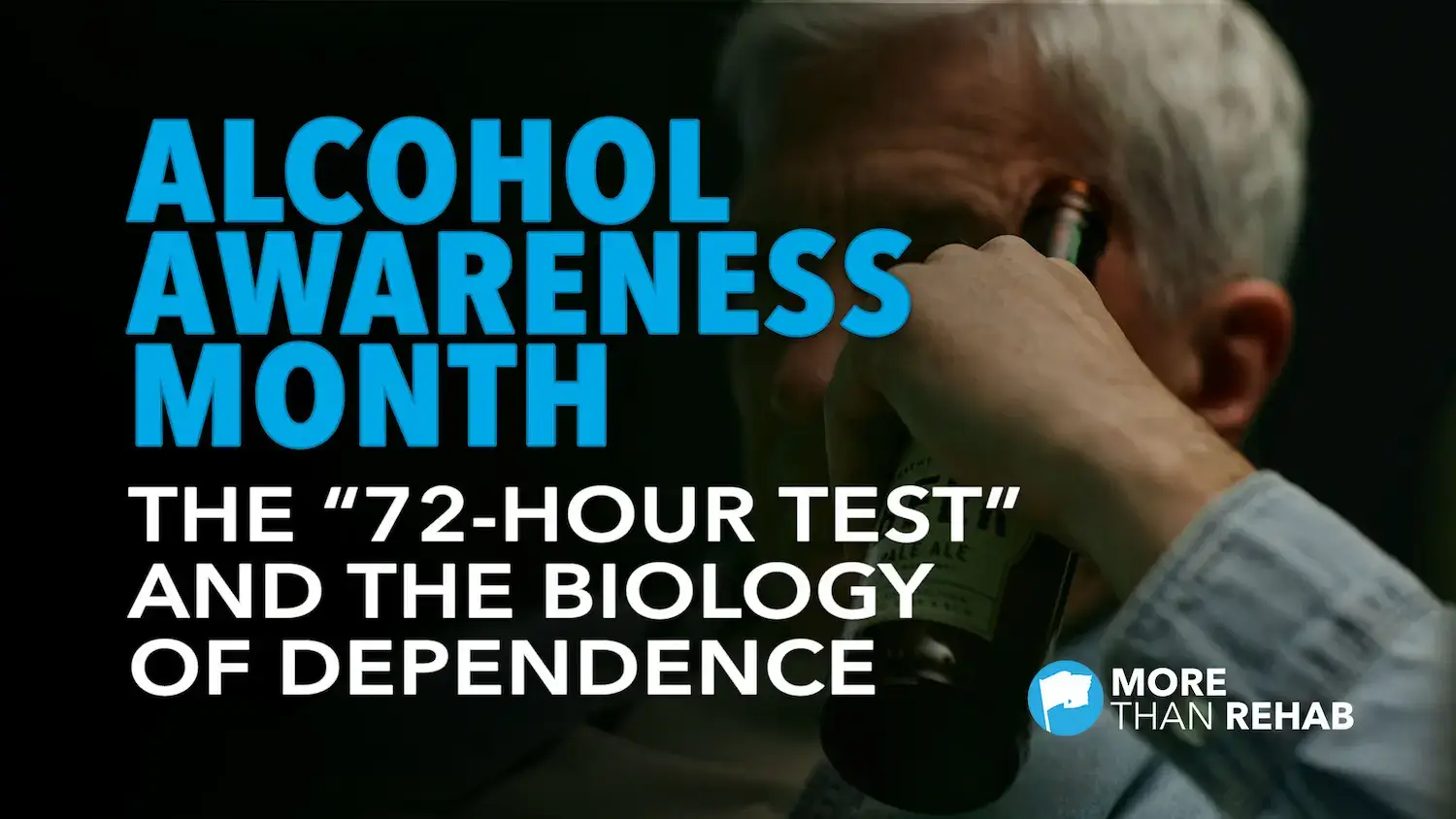
To honor this month, More Than Rehab is promoting the "72-Hour Test." It’s a simple, self-guided challenge: can you go three full days without a drop of alcohol? If the answer is "yes, but I felt terrible," your biology might be trying to tell you something.

When you consume alcohol regularly, your brain performs a balancing act. Alcohol is a central nervous system depressant that enhances GABA (a calming neurotransmitter) and suppresses Glutamate (an exciting neurotransmitter). To stay functional, your brain pushes back by "cranking up" its natural excitability.
When you suddenly stop drinking, the alcohol (the "brake") is removed, but your brain is still "flooring the gas." This creates a hyper-excitable state that manifests in very specific biological stages.
Within the first 6 to 12 hours of your last drink, you may experience early alcohol withdrawal symptoms. This isn't just a hangover. You might feel a sense of "impending doom," mild tremors (the shakes), and significant insomnia. Your heart rate and blood pressure often begin to climb as the brain struggles to recalibrate.
This is often where "chippers" or social drinkers realize they have a problem. During this window, the physical cravings peak. Many people experience "brain fog," intense irritability, and digestive distress. This is the body’s way of demanding the substance it has come to rely on for homeostasis.
For those with a more severe dependency, the 48-to-72-hour mark is the most critical. This is when the risk of Delirium Tremens (DTs) or seizures is at its highest. While most people will only experience heavy sweating and high anxiety, any sign of hallucinations or extreme confusion requires immediate medical attention.
The purpose of the 72-hour test isn't just to see if you can "white-knuckle" it; it’s to observe your body’s reaction. If you find that you cannot make it through 72 hours without experiencing the following, it is a sign of clinical dependence:

Participating in National Alcohol Awareness Month by taking a "dry" break offers more than just a caloric deficit. It provides a "system reset" for your internal organs.
1. Is it safe to do the 72-hour test at home? If you are a heavy, daily drinker, no. Alcohol withdrawal is one of the few types of detox that can be fatal due to seizures. If you have a history of heavy use, you should seek medical detox at a professional Texas alcohol rehab like More Than Rehab to ensure your vitals are monitored.
2. I passed the 72 hours, but I went right back to drinking. Am I okay? Passing the test proves you can stop, but it doesn't address the why. If you find yourself immediately returning to heavy use, you may have a psychological addiction rather than just a physical one. This is where support groups and therapy become essential.
3. What is the NCADD? The National Council on Alcoholism and Drug Dependence (NCADD) is the organization that founded Alcohol Awareness Month. They provide resources for families to understand that alcoholism is a family disease, impacting everyone in the household.
4. How does MTR handle alcohol addiction? We don't believe in just "drying you out." Our alcohol addiction treatment involves the Social Model of Recovery, where you are surrounded by a community of others who are navigating the same Texas "booze culture" challenges. We provide the clinical tools to stay sober and the social support to enjoy it.
Alcohol is the only drug where people think it’s "weird" if you don't use it. This National Alcohol Awareness Month, give yourself permission to step back and assess your relationship with the bottle.
If the 72-hour test feels impossible, or if it reveals a level of discomfort you weren't expecting, don't be discouraged—be informed. Knowledge is the first step toward long-term sobriety.
At More Than Rehab, we have helped thousands of Texans navigate the path from "functional" use to true freedom. Whether you need a safe place to detox or a community to help you stay the course, our doors are open 24/7.
Take the first step toward a clearer tomorrow.
Call More Than Rehab 24/7: (888) 249-2191